
Sea Swimming: How I Found My Way In
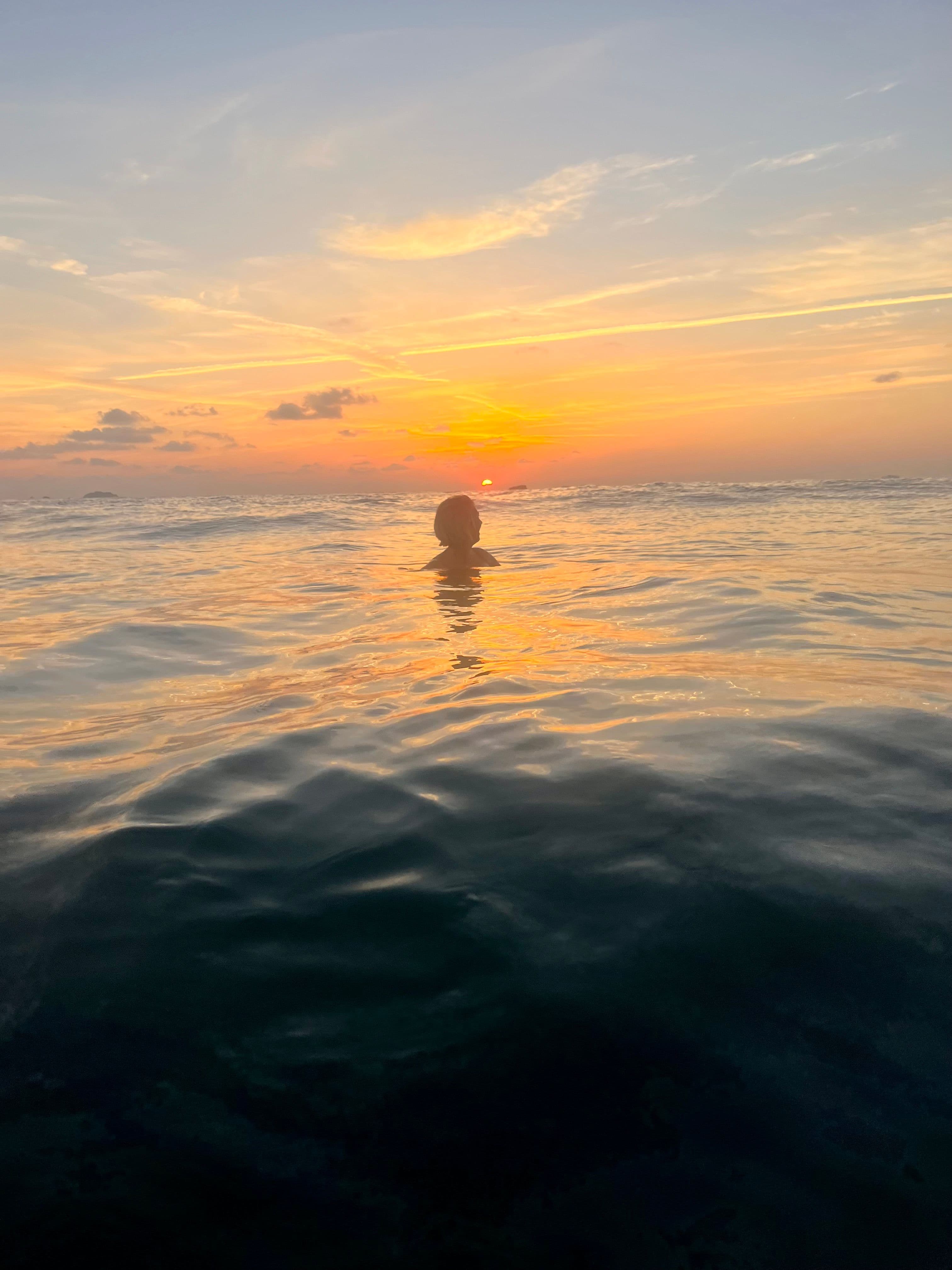
“...a sea dip can elevate dopamine levels as much as a well-known white powder of the Class A variety, except the lift lasts significantly longer.”
Sea swimming is something I never thought I’d do, let alone enjoy.
Growing up on the coast, I could probably count on one hand the number of times I went into the English Channel each year. Sea swimming, in my mind, was something you did in the Mediterranean. Preferably somewhere calm, clear, and warm enough not to steal your breath.
When I moved back to the coast after fifteen years in London, my relationship with the sea began to change. I spent more time near it. Walking alongside it. Looking at it. Respecting it. I knew, instinctively, that it had a calming effect on my brain. That just being close to it helped regulate something in me. Eventually, that curiosity nudged me from looking to getting in.
At first, it was occasional… and always seasonal. A quick in-and-out on a warm day. But during lockdown, something shifted. Sea swimming became something to do when options were limited. Something that helped my mental health and, I hoped, keep my immune system active too. Still, it wasn’t something I ever felt confident doing on my own, so it remained fairly infrequent.
Once lockdown lifted, I was added to a WhatsApp group for parents who had also moved from London. Soho to Sobo (as the locals affectionately call Southbourne). And two years after relocating, I began to find my people. From that group, another splintered off. The Motherdunkers. A loose, ad hoc gathering of like-minded locals fitting sea dips around school drop-offs and Teams meetings. Through them, I was also encouraged to join sessions with the Cold Water Collective [link], a lovely, welcoming group who meet every Sunday morning at 10am. A kind of modern-day congregation, only the ritual involves shared intakes of breath and far less singing of hymns.
Around that time, I also started to listen more carefully to what people were saying about the benefits of sea swimming. Not in a preachy, wellness-guru way, but through snippets of conversation, shared articles, and offhand comments that slowly added up.
Physically, people talked about improved circulation, reduced inflammation, and the way cold water exposure raises your heart rate, forcing the body to work harder to maintain its core temperature. Over time, that process can support metabolism and fat burn. As someone who lives with joint instability, pain, and a reluctance to take part in hardcore fitness, this was all very appealing.
Mentally, the benefits seemed even harder to ignore. Reduced stress and anxiety. A noticeable lift in mood. Better sleep. That sense of clarity that comes from doing something slightly uncomfortable and very real. A reset for the nervous system that lasts far longer than the few minutes you actually spend in the water.
And then there were the social benefits, which are harder to quantify but arguably the most important. Regular connection. Familiar faces. Low-pressure friendships that form through shared experience rather than small talk. Sea swimming, I realised, was not just about cold water. It was a quiet engine for community.
Danish scientist Dr Susanna Søberg, who researches cold exposure and heat therapy, talks about how our relationship with cold water has shifted culturally. In conversations with Rangan Chatterjee, she explains that for most of human history, cold water immersion and heat exposure were part of everyday life. They were not extreme practices, but normal ones.
Over time, particularly after large-scale maritime disasters like the sinking of the Titanic, cold water became associated almost exclusively with danger. Fear replaced familiarity, and only recently have we begun to relearn, backed by modern research, that short, controlled exposure to cold water can have measurable benefits when done safely.
It is impossible to talk about the rise in cold water swimming without mentioning Wim Hof. His popularity and visibility have now brought cold exposure into the mainstream and reframed it as something purposeful rather than reckless. While his approach is more extreme than most people need, it helped shift the conversation. Cold water stopped being something to fear outright and became something people were curious about again. Sea swimming benefited from that change in perception.
Some of the locals I have met through sea swimming have since become some of my favourite people. We still laugh about the time a wave took the bottom half of my bikini clean off during peak beach dog-walking hours. Undignified, yes. But also strangely bonding. And not, I promise, a reason to avoid getting in the sea!
But it was two conversations, in particular, that tipped curiosity into commitment. One person told me, rightly or wrongly, that you could burn up to 300 calories during a cold sea dip. That caught my attention. The other said that a sea dip can elevate dopamine levels as much as a well-known white powder of the Class A variety, except the lift lasts significantly longer. No crash. No comedown. No regrets. A natural, non-addictive high that leaves you feeling clearer rather than depleted.
At that point, I was sold.
Along our stretch of coastline, sea swimming has increasingly woven itself into everyday life. Groups meet at all hours. Some at frankly heroic times in the morning. Some mid-morning during the week. Some go for proper swims rather than just bobbing about. Others favour a quick dip followed by coffee and a good chat. Each group has its own rhythm and values. Almost all are incredibly welcoming, once you pluck up the courage to go.
The arrival of Saltwater Saunas at Sandbanks a few years ago has added so much to our community. Their popularity is such that securing a slot at peak times can sometimes feel harder than getting tickets to an Oasis gig. Truly. But with more saunas popping up along the coast, and others in development, this kind of hot-and-cold ritual is becoming part of the South Coast’s fabric. Here, you can rent an entire sauna with friends or join a communal session, where you are almost guaranteed to meet like-minded, friendly people.
A few years on in my new hometown, sea swimming, or in my case, dipping, has become part of my coastal life. Looking back, it surprises me that I did not do this more when I was younger. Even now, my mum worries about me getting in the sea. And she is not wrong to. The sea deserves respect. I am very aware of the risks and take precautions seriously. But for many of us, those risks are often magnified far beyond reality.
If you are considering a sea dip, it is worth remembering that you can start small. As Dr Susanna Søberg says, you do not need to stay in long. Just a few minutes can be enough to make a difference.
But remember, going with others matters. Not just for safety, but because it makes the whole thing more human, more joyful, and far less intimidating. Pay attention to the kind of group you join. When do they meet? How often? How structured are they? Do they prioritise safety, inclusion, and support?
And one piece of very practical advice I wish I had followed sooner: do not start in the coldest month. March, in particular, is notorious. The sea is usually coldest then, even as the air starts to warm. If you can, begin when the sea is at its warmest, often in September or October, and go regularly as temperatures fall. Gradual change is far easier to manage, both mentally and physically, than shock.
Sea swimming is not about endurance or toughness. For me, it is about finding my way into connection. With the sea. With others. With myself. And like most good things, it turns out, the hardest part is simply getting started.
It took me several years to find my way in, mostly because I didn’t know how. We’ve built Gather to make that part easier. We can’t do much about the sea temperature, but if Gather helps you take the plunge with a little more confidence, then it’s doing exactly what we hoped it would.
If you’re curious, you can find sea swimming gatherings on Gather.